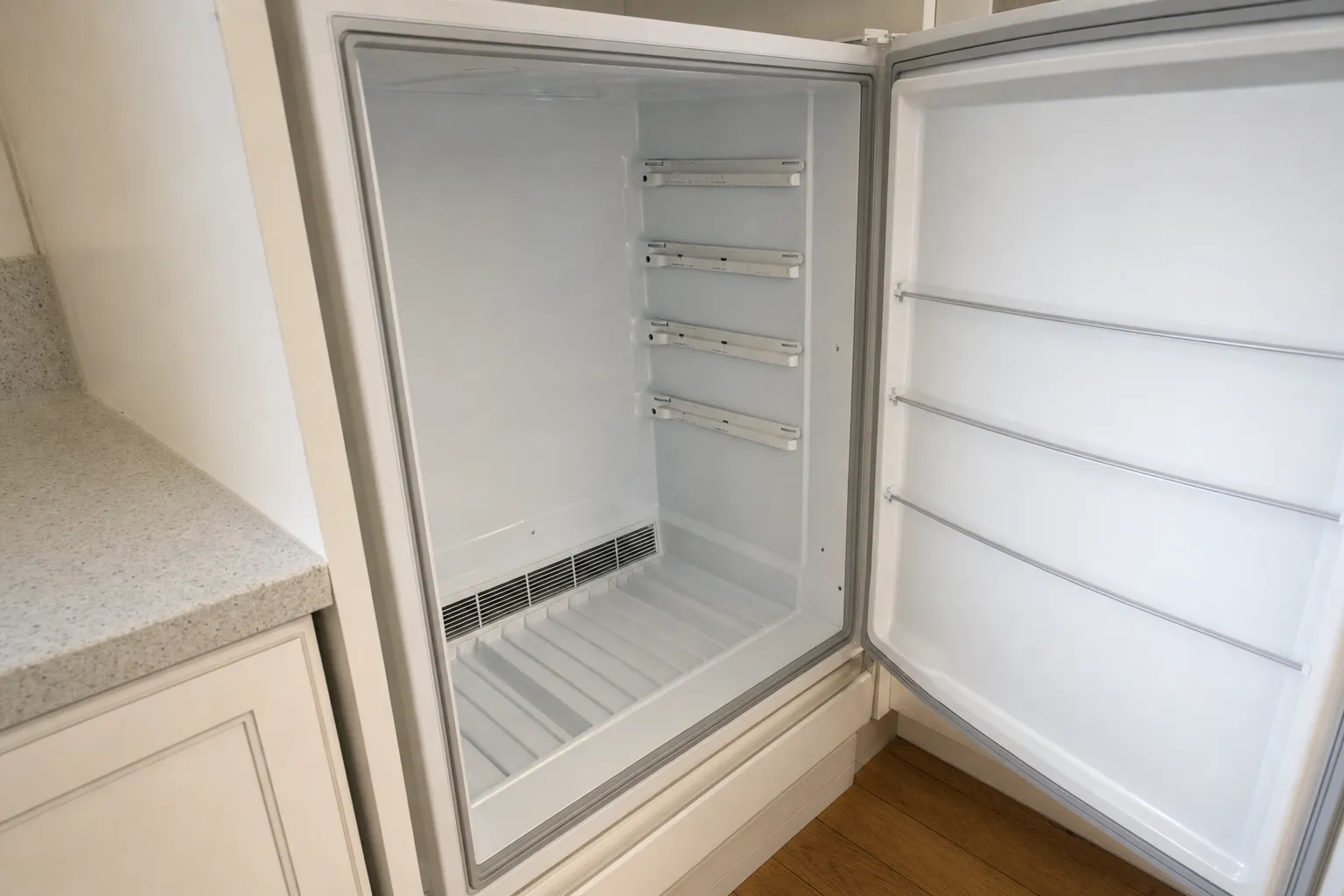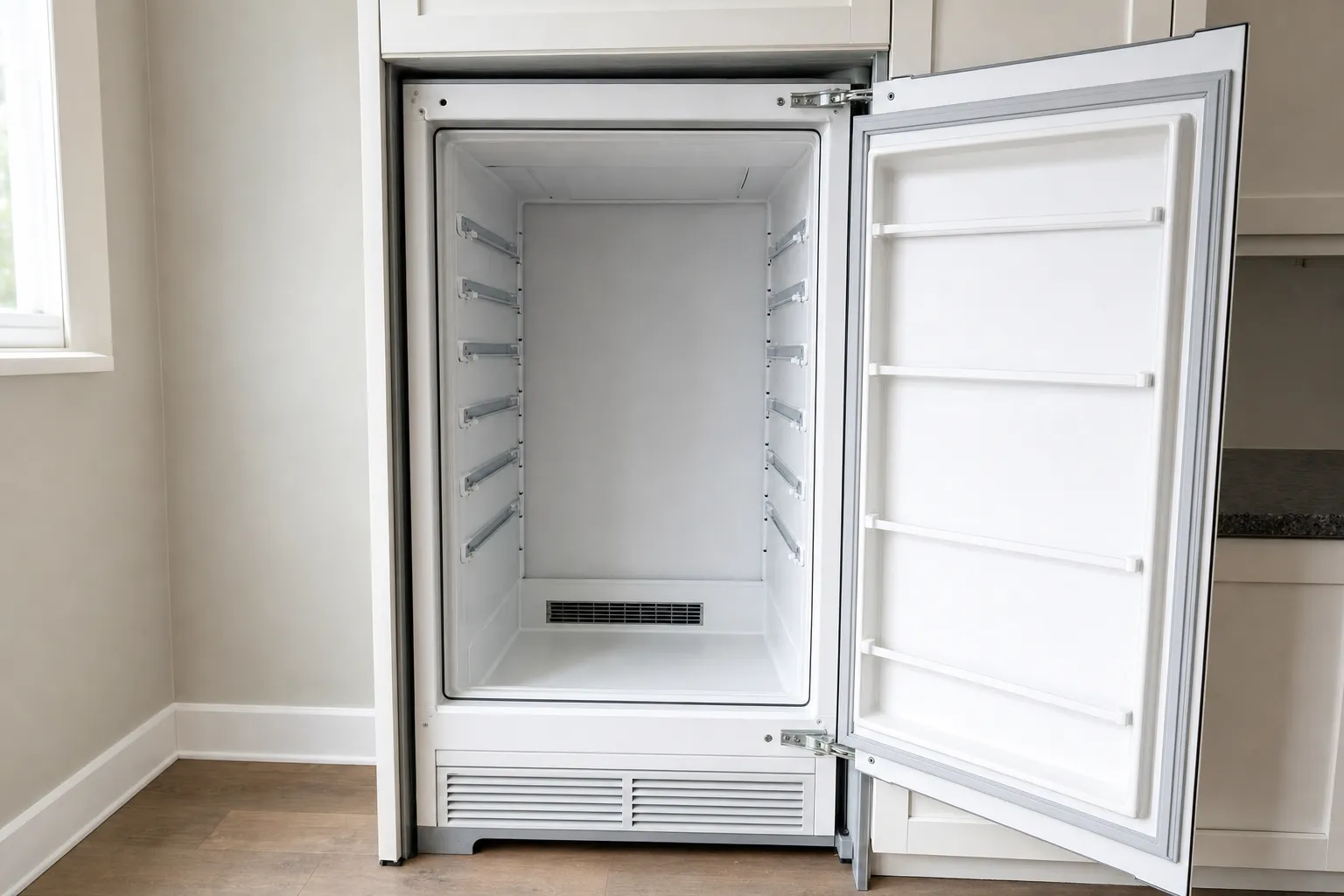
The freezer is still hard, ice cream and all, but the milk is lukewarm and the fresh-food side reads in the forties or fifties. It looks like the refrigerator is dying. Usually it is not. This pattern almost always means cold is being made but not delivered, and the parts that deliver it cost far less than the part that makes it.
How does the cold reach the fresh-food side?
Every refrigerator makes its cold at a coil, called the evaporator, and moves it with air. Some models have one coil, near the freezer, and a fan pushes part of its air through a duct into the fresh-food side. Others give each compartment a coil and a fan of its own. Your use and care guide, or the technician reading the model number, will tell you which kind you have.
Either way, the fresh-food side depends on two things: a fan that turns, and a coil that is clear enough for air to pass through it. Lose either one and the compartment furthest from the cold warms first.
What usually stops it?
Three faults explain most of them.
The evaporator fan has stopped. Its motor wears out, or ice grows into the blade and jams it. With the fan still, the coil stays cold but the air around it stops moving.
The coil has iced over. A frost-free refrigerator melts the frost off its coil every so often, using a small heater, a thermostat or sensor that ends the melt, and a timer or control board that starts it. When any of those fails, frost keeps building until the coil is a block of ice and no air can get through.
The air path is blocked. On single-coil models, a duct or a damper (a flap that meters cold air into the fresh-food side) can freeze shut or be covered by food packed against the vent.
A door that does not seal, or a control that has drifted, can produce the same symptom, which is why the checks below start there.
What can you check yourself?
Nothing here needs a tool or a panel off.
- The door. Close it on a strip of paper at a few points around the seal. If the paper slides out freely anywhere, warm air is getting in.
- The vents. Look for the air openings inside both compartments and move anything pressed against them.
- The setting. Make sure nobody has turned the fresh-food temperature up.
- The back wall of the freezer. Heavy frost or a sheet of ice showing through the vents is the defrost system’s calling card.
- The water. A puddle under the crisper drawers, or ice on the floor of the compartment, often comes from melt water that could not drain.
If all five look normal and the compartment is still warm a day later, the fault is behind a panel.
Is a manual defrost worth trying?
As a test, yes. Empty the unit, switch it off at the breaker, leave the doors open with towels on the floor, and give it a full day. Never chip at ice with a knife or a screwdriver; the coil is easy to puncture. If the fresh-food side cools properly once it is back on, the coil was iced and a defrost part has failed. If it cools and then warms again within a few days, that confirms it. Either way you have bought time, not a repair.
What does the repair usually involve?
Replacing a fan motor, or the defrost part that failed, and clearing the ice behind it. Both jobs sit in the fan-and-defrost band, a long way below any compressor or sealed-system work. The $89 diagnosis that finds the fault comes off the repair when you go ahead.
The compressor only becomes the question when the freezer is losing its cold too, the fans are turning and the coil is clear. At that point it is measured, not assumed.
Asked after reading this
Can I keep food in it until the visit?
Move milk, meat and leftovers into the freezer or a cooler, and keep drinks and condiments where they are. The fresh-food side should sit at 40°F or below; above that, perishables are on a clock. Viking Repair Kirkland books visits from 8am to 8pm every day on (425) 629-0033.
Will switching it off and on again fix it?
Only for a while, and that in itself is a clue. If the coil has iced over, a day switched off with the doors open melts the ice and the fresh-food side cools again, then warms back up within days. That return points at the defrost system rather than the fan.
Why does the freezer stay cold if a fan has stopped?
Because on many models the coil that makes the cold sits in or beside the freezer, so the freezer keeps much of its cold even in still air. The fresh-food side depends on air being blown across to it, so when the fan or the air path fails, it warms first.
Could it be the compressor after all?
It can, but it is the last suspect. If the freezer is also losing its cold, the fans are running and the coil is clear of ice, the compressor and refrigerant are measured next. Viking Repair Kirkland quotes that work only after the reading, never on the symptom alone.